

Laser Hair Removal Packages Review: Real Value
Read a laser hair removal packages review that explains session counts, technology, costs, safety, and how to choose a plan designed for lasting smoothness.
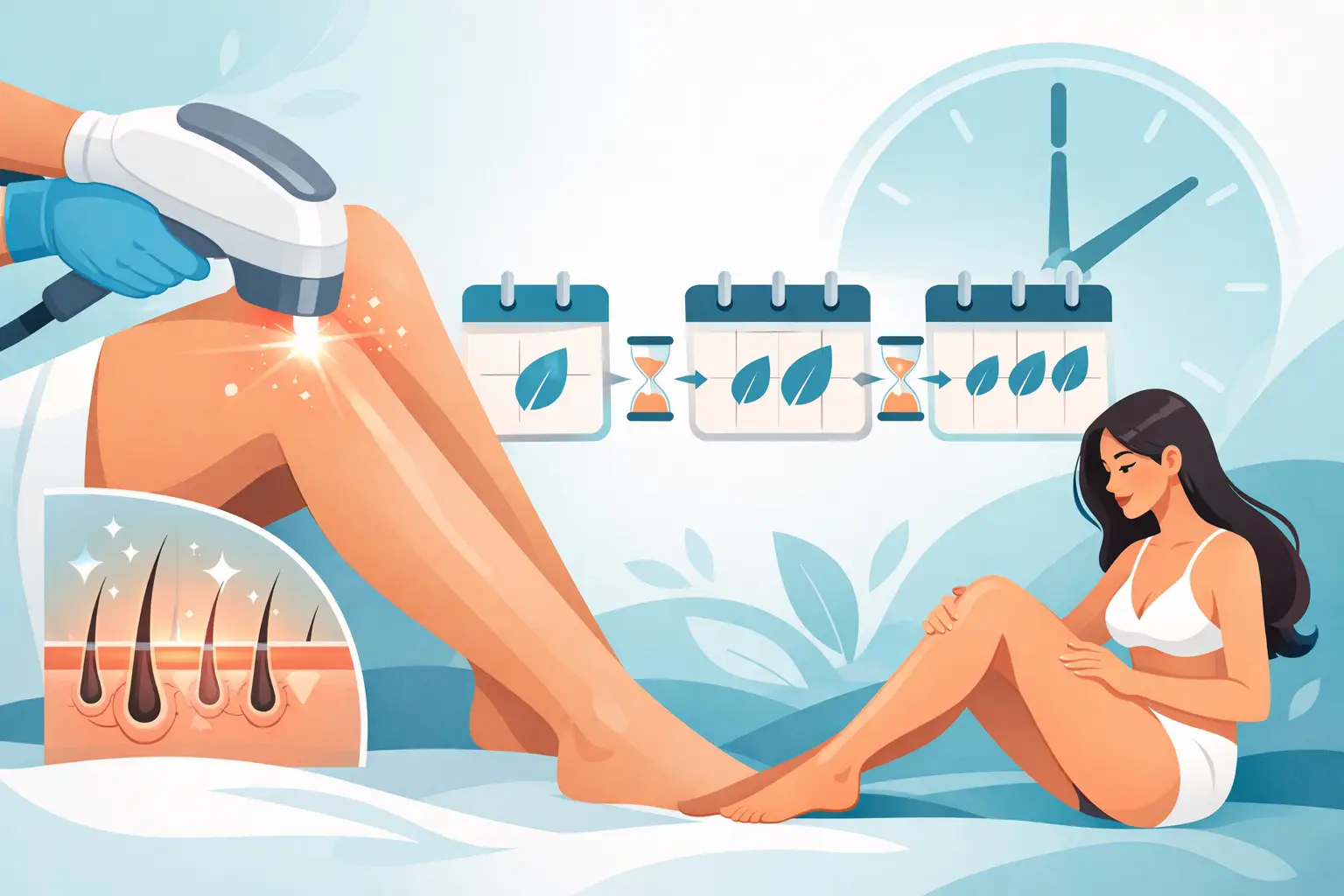
If you are asking how many weeks between laser hair removal, the short answer is usually 4 to 8 weeks – but the right interval depends on the treatment area, your hair growth cycle, and how your skin responds. Timing matters because laser hair removal is most effective when hair is in the active growth phase, and not every follicle reaches that phase at the same time.
That is why a well-planned schedule tends to produce smoother, more consistent results than rushing appointments too close together. At a premier medical spa, spacing is not guesswork. It should be based on the biology of hair growth, the area being treated, and the technology being used.
For most clients, the standard answer is every 4 to 6 weeks for facial areas and every 6 to 8 weeks for body areas. The face typically needs shorter intervals because hair cycles there move faster. The body, including the legs, bikini, underarms, back, and chest, usually responds best with a bit more time between treatments.
These windows are not arbitrary. Laser energy targets pigment in the hair shaft and damages the follicle most effectively when the hair is actively growing. Since only a percentage of follicles are in that phase at any given time, multiple sessions are necessary, and each one needs to be timed to catch a new group of hairs.
A customized treatment plan may adjust those intervals slightly. Some clients metabolize and regrow hair faster, while others notice slower return and may benefit from longer spacing later in the series.
Laser hair removal is not a treatment where more frequent automatically means better. Coming in too early can leave you treating hairs that are not ready, which reduces efficiency and may make the process feel slower overall. Waiting too long is not always ideal either, because it can delay progress and stretch your full treatment plan over a longer period.
The goal is to treat at the point when enough new hairs have entered the active growth phase. That is where experienced providers make a difference. Proper timing, paired with advanced FDA-approved technology and settings tailored to your skin tone and hair type, gives you the strongest path to visible reduction.
Different areas of the body follow different growth patterns, so treatment intervals are usually based on location.
Upper lip, chin, cheeks, jawline, and sideburns are often treated every 4 to 6 weeks. Facial hair tends to cycle more quickly, and hormonal influence can also play a role, especially around the chin and jawline.
Underarms are commonly scheduled every 6 weeks at the beginning. Many clients see this area respond well because the hair is often dark and coarse, which gives the laser a strong target.
These areas are usually treated every 6 weeks, though some clients may be moved to 6 to 8 weeks after several sessions. Hair texture here is often ideal for laser treatment, but consistency still matters.
Full legs or lower legs are commonly treated every 8 weeks. Leg hair generally has a slower cycle than facial hair, so giving the follicles enough time is important.
These areas often fall into the 6 to 8 week range. For men especially, density and hormonal factors can affect how many sessions are needed and how spacing may change over time.
If appointments are booked too close together, you may not have enough hairs in the right phase to justify another treatment. That does not usually harm the skin when performed properly, but it can make the session less productive. You may feel like you are investing time and money without maximizing the result.
There is also a practical issue. If little visible regrowth has appeared, your provider has less active target hair to work with. A precision-based treatment plan is designed to avoid that problem.
Waiting longer than recommended does not erase your progress, but it can interrupt momentum. You may start seeing more regrowth between appointments, and your complete series can take longer to finish. In some cases, clients delay sessions because life gets busy, then wonder why their timeline feels extended.
The treatment still works, but consistency helps produce a cleaner, more efficient progression. Think of it less as a rigid deadline and more as an optimized treatment rhythm.
Most clients need a series of 6 to 8 treatments, though some need more depending on the area, hormones, genetics, and hair density. Facial areas sometimes require additional maintenance because they can be more hormonally driven. Areas with coarse dark hair often respond faster than those with finer or lighter hair.
After your initial series, occasional maintenance sessions may be recommended. That could mean once or twice a year for some clients, or more often for hormonally influenced areas. The best schedule is always individualized.
Not every laser system performs the same way. The quality of the device matters, especially when safety, comfort, and effectiveness across different skin tones are part of the goal. Advanced platforms such as the GentleMax Pro are designed to treat a wider range of clients with greater precision, which can support stronger outcomes when combined with proper spacing.
Hair color matters too. Dark, coarse hair usually responds best because it contains more pigment for the laser to target. Fine, light, gray, red, or blonde hair can be more resistant, and that may affect both the number of sessions and how your provider structures treatment.
Skin tone is another key factor. A responsible provider adjusts wavelength, energy, and timing based on your skin and hair combination. That is where medical expertise becomes especially important. Safe treatment is not separate from effective treatment – it is part of it.
A personalized plan should not stay static if your response changes. If regrowth is appearing much sooner than expected, your provider may tighten the interval slightly. If hair is returning more slowly after several sessions, they may lengthen the spacing.
You may also need schedule adjustments if you have hormonal changes, start certain medications, or develop more sun exposure than planned. Laser treatment is highly effective, but it works best when the plan evolves with your skin and hair behavior.
The time between appointments is not passive. What you do at home affects your outcome.
Shaving is typically allowed and often recommended before treatment, but waxing, tweezing, and threading should be avoided because they remove the follicle the laser is trying to target. Sun exposure should also be limited, especially in Arizona, where incidental sun can add up quickly. Tanned skin can affect treatment settings and may require postponing a session for safety.
It also helps to follow aftercare closely. That includes using gentle skincare in treated areas, avoiding heat if advised, and letting treated hairs shed naturally rather than scrubbing aggressively. Small details support a smoother experience.
Laser hair removal reduces hair progressively. It does not remove every hair forever after one or two sessions, and anyone promising that is oversimplifying the process. What most clients see is thinner, slower, more sparse regrowth over time, with many areas becoming dramatically easier to maintain.
That is why patience and scheduling go together. The most successful treatment plans are not rushed, but they are consistent. With the right spacing, the right device, and expert customization, results can be both visible and long-lasting.
At Laser Aesthetics, treatment planning is designed entirely around you, from skin tone and hair pattern to comfort level and long-term goals. If you have been wondering how many weeks between laser hair removal sessions, the best answer is the one built for your body rather than a generic calendar.
Smooth skin is not just about starting treatments. It is about giving each session the timing it needs to perform at its best.

Read a laser hair removal packages review that explains session counts, technology, costs, safety, and how to choose a plan designed for lasting smoothness.

Compare the best options for body sculpting, from noninvasive fat reduction to muscle toning, and choose a personalized treatment plan with confidence.

Compare the best loose neck treatments, from RF tightening and microneedling to resurfacing, with guidance for choosing the right non-surgical plan today.
Monday: 9 AM–7 PM
Tuesday: 9 AM–5 PM
Wednesday: 9 AM–7 PM
Thursday: 9 AM–5 PM
Friday: 9 AM–4 PM
Saturday: 9 AM–4 PM
Sunday: 9 AM–2 PM