
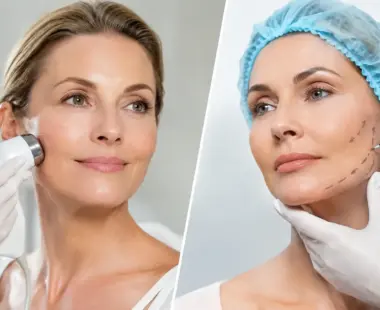
RF Versus Surgical Facelift: Which Fits You?
RF versus surgical facelift: compare lifting power, downtime, longevity, and candidacy to choose a personalized path to firmer, more youthful-looking skin.
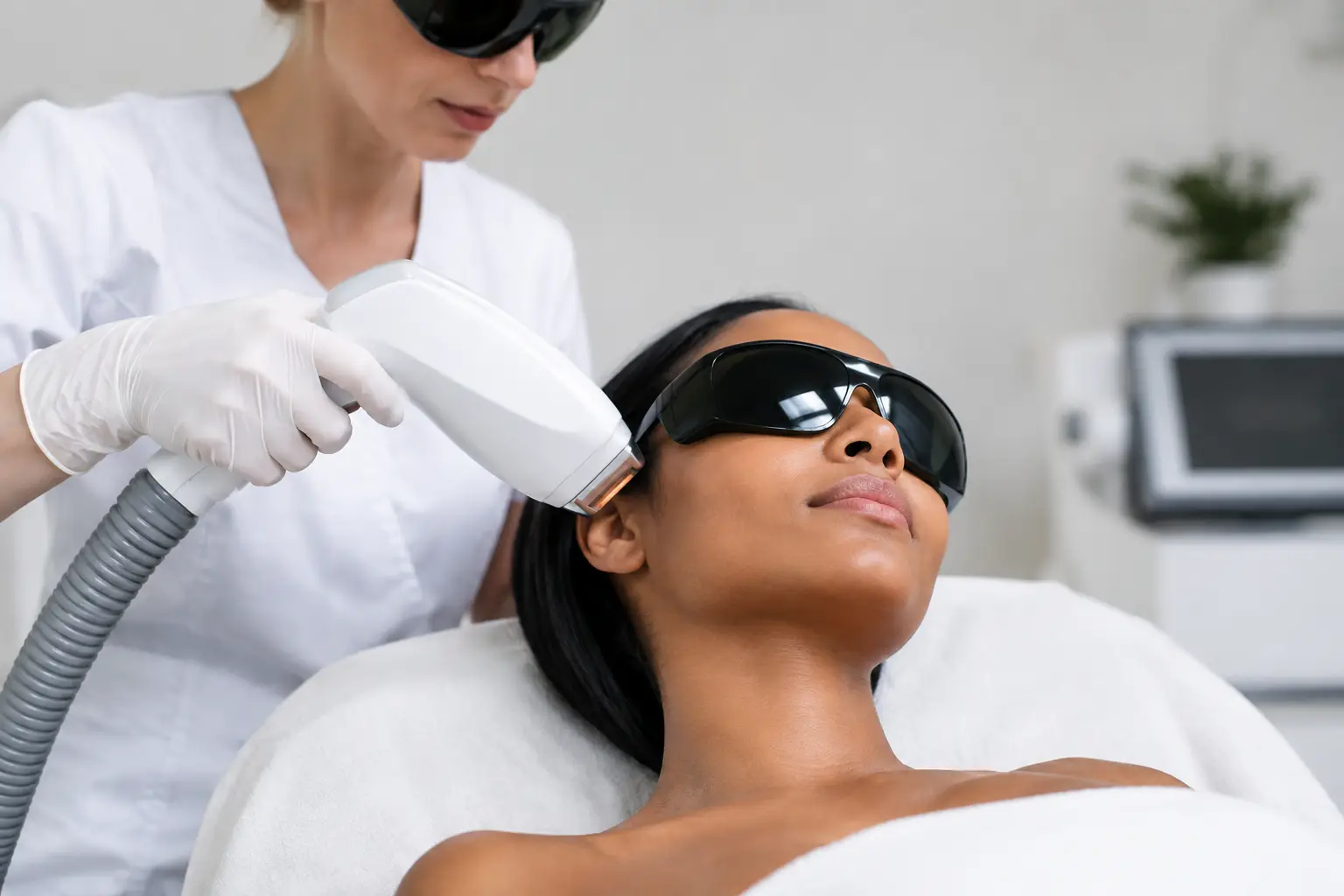
A laser treatment should never feel like a one-setting-fits-all procedure. Laser safety for skin tones depends on a provider’s ability to understand how your skin responds to energy, choose the appropriate wavelength, and adjust each treatment around your unique needs. That precision matters whether your goal is smoother, hair-free skin, improved texture, a more even-looking complexion, or renewed radiance.
For clients with medium, deep, or richly pigmented skin, the right laser can create beautiful results. The wrong device or overly aggressive settings, however, can increase the risk of unwanted pigment changes, burns, or prolonged irritation. Safe treatment is not about avoiding lasers because of your skin tone. It is about choosing advanced technology and experienced care designed to treat your skin responsibly.
Lasers work by delivering concentrated light energy to a target in the skin. In laser hair removal, that target is melanin, or pigment, within the hair follicle. In skin resurfacing and pigment-focused treatments, energy is directed toward specific layers and concerns within the skin.
Melanin is also present in the surrounding skin. The more melanin your skin contains, the more carefully a provider must distinguish between the intended target and the skin around it. If too much energy is absorbed by surrounding pigment, the skin may become irritated or react by producing more or less pigment during healing.
This does not mean deeper skin tones are automatically poor candidates for laser services. It means treatment planning needs more precision. A thoughtful provider considers your Fitzpatrick skin type, natural skin color, current tan or sun exposure, treatment history, medications, sensitivity, and the concern being treated before selecting a device or setting.
Not all lasers interact with skin in the same way. Wavelength matters because it affects how deeply the energy travels and how strongly it is absorbed by melanin.
For example, an alexandrite laser can be highly effective for many lighter skin tones because of its affinity for pigment. For deeper skin tones, a 1064 nm Nd:YAG laser is often a preferred option for laser hair removal. Its longer wavelength reaches deeper into the follicle while reducing absorption by pigment closer to the skin’s surface. This allows providers to target unwanted hair with a stronger safety margin for richly pigmented skin.
The best choice still depends on the person and the service. A client with a deeper skin tone seeking hair removal may benefit from a different approach than someone addressing acne scars, texture, or uneven pigmentation. “Best” is not a universal setting or a single device. It is the technology and protocol selected for your particular skin, goal, and tolerance.
At Laser Aesthetics, advanced platforms such as GentleMax Pro allow experienced providers to work with multiple wavelengths and customized parameters. That flexibility is valuable because it supports a plan designed entirely around you, rather than forcing every client into the same treatment formula.
Effective cooling is not just a comfort feature. It helps protect the skin’s surface before, during, and after laser energy is delivered. Integrated cooling can reduce discomfort while supporting safer treatment at settings appropriate for the treatment area and skin type.
Cooling does not replace clinical judgment. A provider still needs to select the right pulse duration, spot size, energy level, and treatment speed. But when paired with proper technique, it contributes to a more comfortable experience and a more controlled response.
A patch test gives your provider a small, controlled way to observe how your skin responds before treating a larger area. It is especially useful for clients with deeper skin tones, a history of hyperpigmentation, recent sun exposure, sensitive skin, or prior laser reactions.
During a patch test, the provider treats a discreet area using carefully selected settings. The skin is then monitored for an appropriate period, which may vary depending on the service and your history. A normal response may include mild warmth, temporary redness, or slight follicular swelling after hair removal. Persistent discomfort, blistering, unusual darkening, or significant lightening should always be assessed before moving forward.
A patch test is not a sign that your provider is uncertain. It is a sign that they are taking a measured, science-based approach to your safety and results.
Post-inflammatory hyperpigmentation can occur when skin produces extra pigment after irritation or injury. It is more common in deeper skin tones, but it can affect anyone. Hypopigmentation, or loss of pigment, is less common but can also occur after excessive energy or improper treatment selection.
Several factors can make pigment changes more likely. Recent tanning, sunburn, self-tanner, active irritation, and inconsistent sunscreen use can all complicate laser treatment. Certain medications and topical products may increase sensitivity as well. This is why a complete consultation matters. Be direct about prescription medications, acne products, exfoliating acids, retinoids, recent procedures, and any history of keloid scarring or pigmentation changes.
Your provider may recommend postponing treatment if your skin is tanned, compromised, or inflamed. That can feel inconvenient, particularly when you are preparing for a vacation or event, but waiting is often the safer choice. Healthy, stable skin creates a better foundation for a beautiful result.
A customized treatment plan works best when you follow the preparation and aftercare guidance provided by your aesthetic team. For most laser services, protecting the treatment area from direct sun exposure is essential before and after appointments. Broad-spectrum sunscreen, protective clothing, and avoiding intentional tanning help keep your baseline skin tone consistent and reduce unnecessary risk.
For laser hair removal, you may be asked to shave the area shortly before treatment while avoiding waxing, tweezing, or threading for several weeks. Those methods remove the hair root that the laser needs to target. For resurfacing or pigment treatments, your provider may ask you to pause certain active skincare ingredients for a defined period.
After treatment, keep the area calm. Avoid heat-heavy activities, harsh exfoliation, fragranced products, and picking at flaking skin if it occurs. Use the recommended gentle skincare and sun protection. If your skin response seems stronger than expected, contact your provider rather than trying to treat it yourself with multiple new products.
Confidence comes from clear answers. Before any laser treatment, ask which device and wavelength will be used for your skin tone, why that choice is appropriate, and whether a patch test is recommended. Ask what sensations and short-term changes are normal, what signs require a call, and how you should prepare your skin.
You can also ask how frequently the provider treats clients with your skin tone and concern. Experience should include more than operating a device. It should include recognizing when to adjust settings, when to choose a different treatment path, and when to delay treatment to protect the skin.
Be cautious of promises that sound identical for every client. Visible improvement is possible across a wide range of skin tones, but treatment timelines, settings, and results vary. A provider who discusses realistic expectations is protecting both your skin and your investment.
The goal of laser aesthetics is not simply to deliver energy to the skin. It is to create a controlled response that supports your desired outcome while respecting your skin’s natural biology. For some clients, that means starting conservatively and building treatment intensity over time. For others, it means selecting a different modality, such as microneedling or another skin-renewing service, when laser energy is not the best fit for the concern.
Your skin tone should never be an afterthought in an aesthetic consultation. It should shape the plan from the first conversation through each follow-up appointment. When advanced, FDA-cleared technology is paired with individualized settings, careful preparation, and expert execution, laser treatments can be a safe, effective part of your long-term skin and confidence goals.
Choose a provider who sees your skin clearly, explains the reasoning behind every recommendation, and is willing to tailor the treatment until it is right for you.

RF versus surgical facelift: compare lifting power, downtime, longevity, and candidacy to choose a personalized path to firmer, more youthful-looking skin.
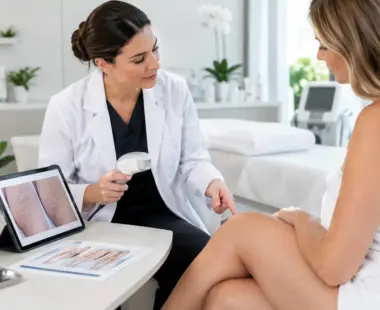
Our cellulite treatment review explains why dimpling forms, which options can improve it, and how personalized care supports smoother-looking skin over time.

Learn how to improve cellulite appearance with lifestyle habits and advanced non-surgical treatments designed for smoother, firmer-looking skin with care.
Monday: 9 AM–7 PM
Tuesday: 9 AM–5 PM
Wednesday: 9 AM–7 PM
Thursday: 9 AM–5 PM
Friday: 9 AM–4 PM
Saturday: 9 AM–4 PM
Sunday: 9 AM–2 PM