

Best Hair Removal Phoenix Options for Smooth Skin
Searching for the best hair removal Phoenix offers? Learn how laser technology, skin-tone expertise, and a personal plan create smoother, lasting results for you.
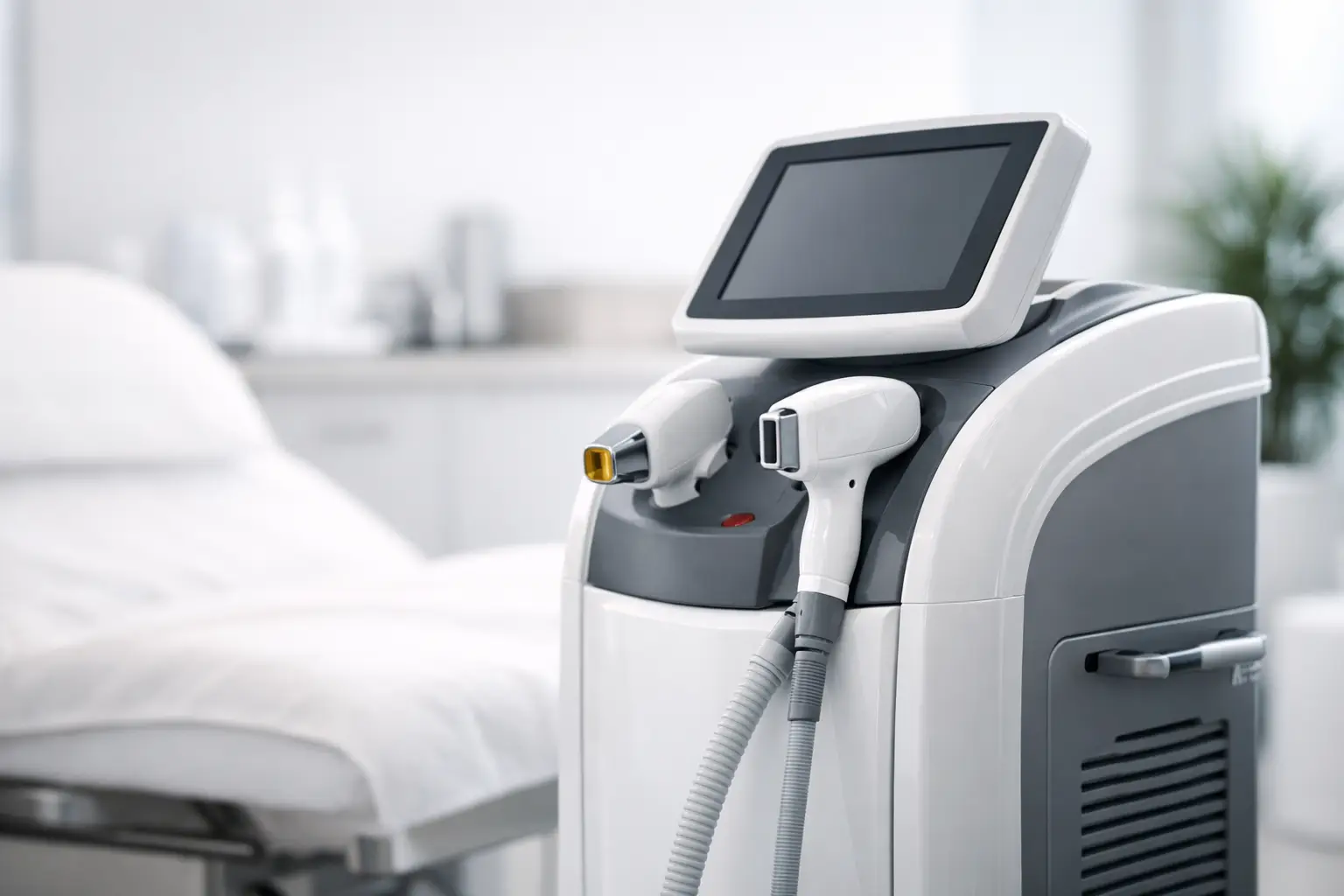
A lot of people searching for the best laser hair removal machine 2026 are really asking a more useful question: which technology is most likely to give me smooth skin safely, efficiently, and with results that last? That distinction matters, because the right answer is rarely about hype or the newest label on a device. It is about wavelength, cooling, customization, and who is operating the machine.
In aesthetics, newer is not automatically better. Some of the most reliable platforms in laser hair removal continue to lead because they combine proven engineering with precise settings for different skin tones, hair types, and treatment areas. If you are comparing options in 2026, especially in a medically guided setting, the quality of the platform and the experience behind it should carry more weight than trend-driven marketing.
A strong laser platform in 2026 should do four things well. It should target the hair follicle effectively, protect the surrounding skin, adapt to a range of skin tones, and make treatment tolerable enough that clients complete the full series. Those points sound simple, but they separate premium clinical devices from underpowered systems that often lead to inconsistent reduction.
The science is straightforward. Laser hair removal works by delivering energy into the pigment in the hair follicle. That energy converts to heat and disrupts the follicle’s ability to regrow hair. The challenge is delivering enough energy to affect the follicle without overheating the skin around it. That is where wavelength selection, pulse duration, spot size, and cooling technology become essential.
A machine can look impressive on paper and still fall short if it lacks enough power, if it is not well suited for a broader range of skin tones, or if treatment settings are too limited. On the other hand, a well-established system with excellent cooling and flexible parameters may produce better real-world results than a device marketed as the latest thing.
When people compare devices, they often focus on brand names first. Brand matters, but wavelength matters more. Different lasers interact with skin and hair in different ways, which is why one machine may be ideal for a fair-skinned patient with coarse dark hair while another is safer for deeper skin tones.
Alexandrite lasers, typically operating at 755 nm, are highly effective for lighter skin tones and dark hair because they target melanin efficiently. They are often favored when speed and strong hair reduction are top priorities. Nd:YAG lasers, usually at 1064 nm, penetrate more deeply and bypass more surface pigment, making them a safer and more versatile option for darker skin tones.
That is why dual-wavelength platforms continue to stand out in 2026. A machine that can offer both Alexandrite and Nd:YAG has a clear advantage in customization. It gives providers the ability to match the treatment to the individual instead of fitting the individual into the limitations of a single technology.
If the goal is premium, medically grounded laser hair removal, the strongest contenders in 2026 are not random consumer devices or low-energy spa machines. They are professional systems with a long track record, strong safety profiles, and dependable performance.
The GentleMax Pro remains one of the most respected names in the category for good reason. It combines Alexandrite and Nd:YAG technology in one platform, which gives providers more flexibility across skin tones and treatment goals. It is also known for speed, precision, and integrated cooling that improves comfort during treatment. For many practices, it continues to represent the benchmark because it balances power with safety in a way that supports consistently strong outcomes.
Diode lasers also remain widely used, especially in practices that prioritize hair reduction across multiple body areas. They can be effective, particularly for medium skin tones and coarse hair, but results can vary more depending on the specific device and how it is operated. Some diode platforms are excellent. Others are simply more limited in versatility.
IPL systems still appear in some comparisons, but they are not true lasers. Intense pulsed light uses a broad spectrum of light rather than a single focused wavelength. While IPL may help with some hair reduction in select candidates, it is generally less precise than a dedicated laser platform. For clients seeking efficient, long-term reduction, especially on denser or more stubborn hair, IPL usually does not represent the gold standard.
Even the best laser hair removal machine 2026 can underperform in the wrong hands. This is one of the biggest disconnects in online research. Clients compare devices, but their results depend just as much on treatment planning, skin assessment, settings selection, and consistency across sessions.
Hair grows in cycles, and laser treatment is only effective during the active growth phase. That is why a single session is never the full treatment. Most people need a series, spaced strategically, to catch follicles at the right stage. Hormones, hair thickness, body area, and prior hair removal methods all influence timing and expectations.
Customization also matters more than many people realize. Facial hair can respond differently than underarms. A bikini treatment may require different settings than legs. Darker skin tones require thoughtful parameter adjustments to protect the skin while still delivering effective energy to the follicle. This is where a medically informed provider adds real value.
If you are evaluating treatment options, ask what platform is being used and why it is appropriate for your skin tone and hair type. A reputable provider should be able to explain this clearly, not dodge the question with vague claims about being the newest or best.
You should also ask about cooling. Comfort is not a luxury feature. It directly affects whether stronger, more effective settings can be used responsibly. Advanced cooling can make treatment far more tolerable, especially on larger or more sensitive areas.
It is also worth asking who performs the treatment and how settings are adjusted over time. Hair reduction is not static. As hair density changes, treatment parameters may need to evolve. A personalized plan tends to outperform a one-size-fits-all package, even when the device itself is excellent.
For clients in Scottsdale, Phoenix, Cave Creek, or Fountain Hills, this is especially relevant because there is no shortage of aesthetic providers marketing laser services. The difference often comes down to whether the experience is centered on true clinical customization or simply built for volume.
Home-use devices continue to improve, and for some people they may offer mild maintenance benefits. But they are still not equivalent to professional laser platforms. The energy levels are lower by design, largely for safety reasons, which also limits the degree of follicle disruption they can achieve.
That does not mean at-home devices are useless. They may help with temporary reduction or touch-up support for the right candidate. But if someone wants significant long-term reduction on areas like the face, underarms, bikini line, chest, or legs, professional treatment remains the more effective path.
The trade-off is clear. Home devices offer convenience and lower upfront cost, while professional systems deliver more power, better customization, and typically more visible results. For many clients, the better value comes from choosing a proven in-office platform from the start rather than spending time and money on options that only partially address the problem.
The conversation around laser hair removal in 2026 should be less about novelty and more about performance. The best machine is the one that combines clinically proven wavelengths, strong safety features, effective cooling, and enough flexibility to treat real people with different skin tones and goals.
That is why established platforms like the GentleMax Pro continue to lead. Not because they are the loudest name in the room, but because they have earned trust through results. At Laser Aesthetics, that standard aligns with how treatment should feel from start to finish – advanced, personalized, and designed around visible improvement rather than marketing language.
If you are comparing options this year, look past the trend claims. The right laser should match your skin, your hair, and your long-term goals. When technology and expertise are paired well, smoother skin stops feeling like a gamble and starts feeling like a plan.

Searching for the best hair removal Phoenix offers? Learn how laser technology, skin-tone expertise, and a personal plan create smoother, lasting results for you.
Compare laser hair removal versus electrolysis, including results, comfort, cost, skin tone, and treatment time, to choose the right approach for you.

Learn how to choose body contouring based on your goals, treatment area, timeline, and skin quality, with safe, personalized guidance for results today.
Monday: 9 AM–7 PM
Tuesday: 9 AM–5 PM
Wednesday: 9 AM–7 PM
Thursday: 9 AM–5 PM
Friday: 9 AM–4 PM
Saturday: 9 AM–4 PM
Sunday: 9 AM–2 PM