

Best Laser for Dark Skin and Safer Hair Removal
Searching for the best laser for dark skin? Learn why Nd:YAG technology, expert settings, and a personalized plan make safer hair removal possible today.
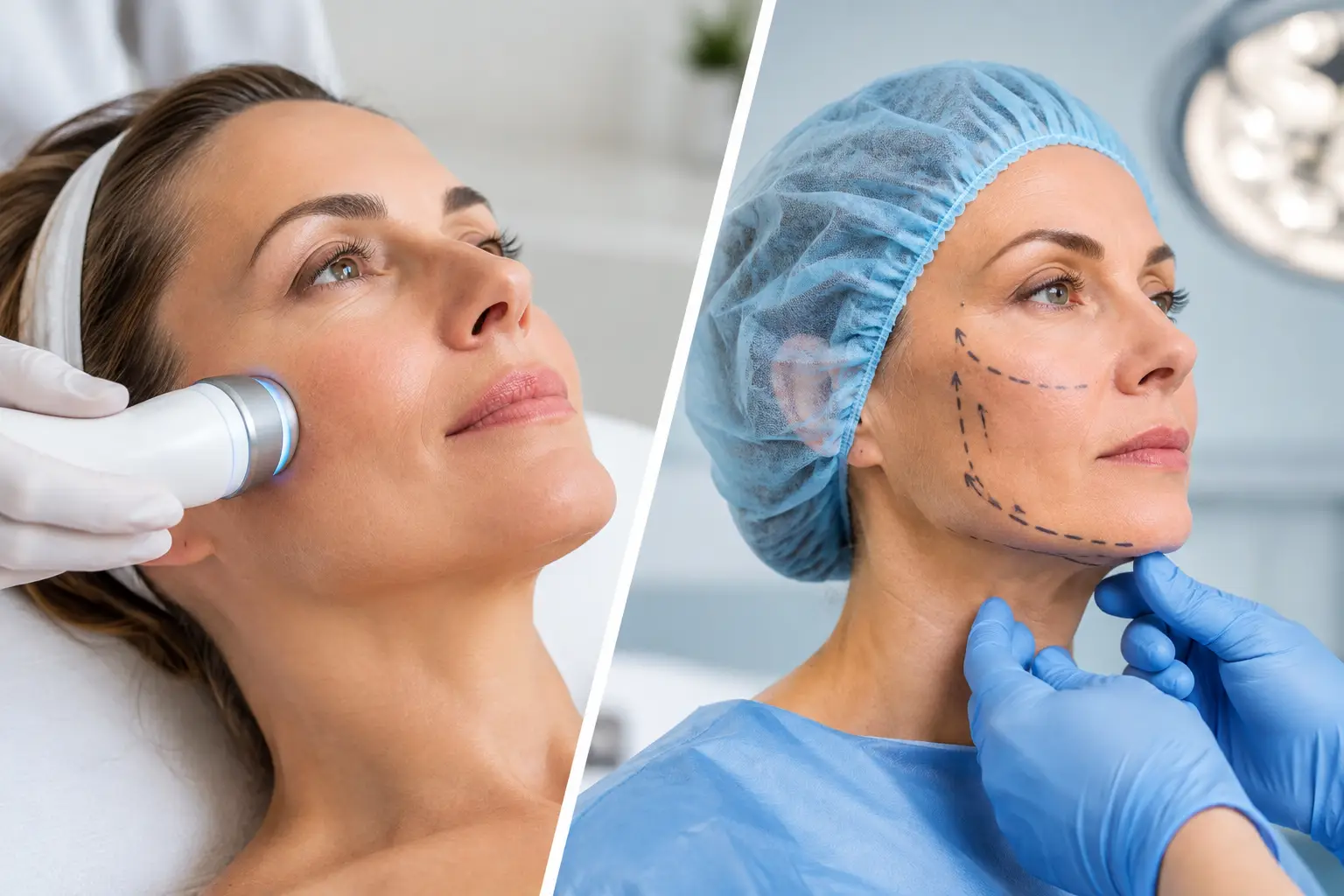
A sharper jawline, firmer cheeks, and smoother lower-face skin can all sound like one goal. But the right treatment depends on what is actually changing beneath the surface. RF tightening versus surgical facelift is not simply a choice between non-surgical and surgical care. It is a decision about the degree of laxity, the improvement you want to see, how much downtime fits your life, and whether you need prevention, refinement, or structural correction.
For many Scottsdale-area clients, radiofrequency treatments are an appealing first step because they support firmer-looking skin without incisions or a lengthy recovery. A facelift remains the more powerful option when loose skin and descended facial tissue have become more pronounced. Both can be valuable. They simply solve different problems.
Radiofrequency, or RF, uses controlled energy to gently heat targeted layers of skin. That thermal response can encourage the body’s natural collagen remodeling process, helping skin look firmer, smoother, and more supported over time. Treatment settings should be selected carefully for your skin quality, sensitivity, treatment area, and goals.
RF tightening is often a strong match for early to moderate laxity. You may notice it around the jawline, cheeks, neck, or areas where skin looks less resilient than it once did. It can also complement concerns such as fine lines and crepey texture, depending on the technology used and your customized treatment plan.
The key is expectation-setting. RF can improve skin quality and create a more refreshed appearance, but it does not remove excess skin, reposition deeper facial structures, or create the dramatic lift associated with surgery. The change is usually gradual and natural-looking rather than immediate and transformative overnight.
Most clients describe RF treatments as warm and manageable. Depending on the device and area being treated, there may be temporary redness, warmth, or mild swelling afterward. Many people return to work, social plans, or normal routines the same day, making RF especially practical for professionals who do not want to disappear for weeks of recovery.
A series of treatments may be recommended. Collagen remodeling also takes time, so results commonly continue to develop over several weeks to months. Maintenance treatments can help support results as the natural aging process continues.
A surgical facelift addresses a different level of aging. Performed by a qualified facial plastic surgeon or plastic surgeon, it can lift and reposition deeper tissue, reduce significant sagging, improve jowling, and remove or redrape excess skin. For someone whose lower face and neck have changed substantially, surgery can deliver an improvement that non-surgical technologies cannot duplicate.
A facelift is particularly effective when the issue is not just skin texture, but tissue descent. If the cheeks have flattened, the jawline has lost definition, or loose neck skin is prominent, skin tightening alone may provide only a modest change. Surgery is built to correct those structural concerns.
That greater correction comes with greater commitment. A facelift involves anesthesia, incisions, bruising, swelling, a dedicated recovery period, and the normal risks associated with surgery. Results can be long-lasting, but they do not stop aging. Thoughtful skincare, sun protection, weight stability, and occasional non-surgical maintenance still matter afterward.
The most useful comparison is not which option is better overall. It is which option is appropriate for your anatomy and priorities.
RF is generally best for clients who want subtle to moderate tightening, improved skin quality, minimal downtime, and a gradual outcome. It may be especially appealing in the late 20s through 50s, although age alone does not determine candidacy. Skin elasticity, genetics, sun exposure, weight changes, and facial structure all affect what a treatment can achieve.
A surgical facelift is generally more appropriate for advanced laxity, noticeable jowls, excess skin, a loose neck, or a desire for more significant and durable correction. It is also the more realistic choice for clients who have tried non-surgical treatments and are no longer seeing the level of improvement they want.
There is a middle ground, too. Some people are technically candidates for surgery but prefer to delay it. Others are good RF candidates now and may choose surgery later. Neither choice is a failure to commit. A well-designed aesthetic plan can evolve as your face, lifestyle, and goals evolve.
This is where honest guidance matters most. The best RF results tend to look like you on a well-rested, well-cared-for day: skin appears firmer, texture looks smoother, and contours may look more refined. Friends may notice that you look refreshed without identifying a specific procedure.
A facelift can create a much more visible reset in the lower face and neck. It can restore cleaner contour and address laxity that cannot be tightened away with energy-based treatment. When performed well, the goal is still a natural result, not a pulled or overcorrected appearance.
If you are hoping to eliminate jowls, significantly lift the midface, or remove loose neck skin, RF should not be presented as a replacement for surgery. If your goal is to improve early laxity, preserve collagen, and maintain a polished appearance without surgical recovery, RF may be precisely the right level of treatment.
Lifestyle often guides the decision as much as anatomy. RF requires little to no social downtime for most clients, while facelift recovery requires planning. Bruising and swelling can be substantial in the early healing phase, and it can take time for tissues to settle fully.
The financial picture should also be viewed over time. A facelift is a larger upfront investment because it includes surgery, anesthesia, facility costs, and postoperative care. RF is typically more accessible per session, though a treatment series and maintenance plan may be needed to preserve your best result. Comparing a single RF appointment to surgery is not especially useful. Compare the result you want, the recovery you can accommodate, and the long-term plan you are comfortable maintaining.
Timing matters as well. RF can be a smart option before a milestone when started early enough for collagen remodeling. Surgery should not be scheduled immediately before a major event, photo-heavy vacation, or period when you cannot prioritize recovery.
Energy-based treatments should never be one-size-fits-all. Skin tone, sun exposure, active skin conditions, implanted medical devices, medications, previous procedures, and healing history can all affect whether RF is appropriate and how it should be performed. Advanced FDA-cleared technology is valuable, but skilled treatment planning and responsible settings are equally essential.
Surgery also requires careful screening. A reputable surgeon will assess your health history, skin quality, facial anatomy, expectations, and readiness for recovery. Be cautious of anyone who guarantees a specific result or dismisses the limitations and risks of either option.
At Laser Aesthetics, a personalized consultation is designed to help you understand what non-surgical treatment can realistically accomplish for your skin. If your concerns point toward surgery, clear guidance is more valuable than overselling a procedure that is unlikely to meet your expectations.
RF and facelift surgery do not have to be competing paths. Some clients use RF to maintain skin quality before they ever consider surgery. Others pursue RF or other non-surgical treatments after surgical healing, when appropriate, to support texture and collagen over time.
A complete plan may also include treatment for pigmentation, fine lines, or uneven texture, since lifting alone does not address every visible sign of aging. The most polished results often come from treating the concern that bothers you most while respecting the overall health and character of your skin.
The right choice should leave you feeling informed, not pressured. If you want refined firmness with minimal interruption to your schedule, RF may be a confident next step. If you need meaningful correction of loose skin and descended facial tissue, a surgical consultation may offer the clarity you need. Your best treatment is the one that matches your real goal and lets your natural beauty remain unmistakably yours.
Searching for the best laser for dark skin? Learn why Nd:YAG technology, expert settings, and a personalized plan make safer hair removal possible today.
Microneedling versus resurfacing: compare downtime, skin concerns, comfort, and results to choose the right personalized treatment for your goals today.
Learn how GentleMax Pro targets unwanted hair, pigmentation, and skin concerns with personalized settings, comfort, precision, and care. For visible results.
Monday: 9 AM–7 PM
Tuesday: 9 AM–5 PM
Wednesday: 9 AM–7 PM
Thursday: 9 AM–5 PM
Friday: 9 AM–4 PM
Saturday: 9 AM–4 PM
Sunday: 9 AM–2 PM