
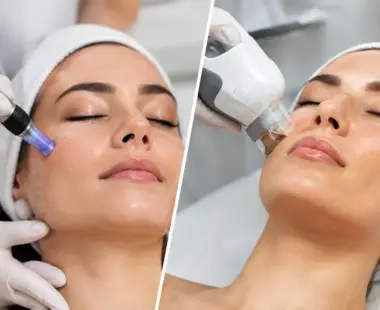
Microneedling Versus Resurfacing: Which Fits?
Microneedling versus resurfacing: compare downtime, skin concerns, comfort, and results to choose the right personalized treatment for your goals today.

A laser setting that works beautifully on fair skin can create unnecessary risk on deeper skin tones. That is why finding the best laser for dark skin is not about choosing the strongest treatment or the lowest price. It is about choosing the right wavelength, appropriate settings, and an experienced provider who understands how melanin responds to energy.
For many clients with medium-deep to deep skin tones, long-pulsed Nd:YAG laser technology is the leading option for laser hair removal. When used thoughtfully, it can reduce unwanted hair effectively while helping protect the surrounding skin from excess heat, pigmentation changes, and burns.
Laser hair removal works by directing light energy toward melanin, the pigment that gives hair its color. The laser converts that light into heat, damaging the hair follicle to reduce future growth. The challenge is that melanin is also present in the skin.
On lighter skin, there is often a clearer contrast between dark hair and lighter surrounding skin. With darker skin tones, the laser must distinguish between pigment in the hair follicle and pigment in the skin. If the wavelength is too readily absorbed by skin melanin, or if the settings are too aggressive, the skin can absorb more energy than intended.
That can increase the risk of post-inflammatory hyperpigmentation, hypopigmentation, blistering, or burns. These outcomes are not inevitable, and darker skin should never be excluded from laser hair removal. They do, however, make device selection and clinical judgment essential.
A quality treatment plan considers more than a skin-tone category. Your provider should assess your natural skin color, current tan level, hair color and density, treatment area, history of pigmentation, medications, and any active skin concerns. This is personalized care in its most practical form.
The 1064 nm Nd:YAG laser is widely considered the safest and most versatile laser wavelength for darker skin tones. Its longer wavelength travels deeper into the skin and is less attracted to melanin near the surface than shorter wavelengths such as alexandrite or IPL-based devices.
This matters because less superficial melanin absorption gives an experienced provider more room to target the follicle while reducing avoidable stress on the skin’s surface. It is a smart balance of efficacy and safety, especially for Fitzpatrick skin types IV through VI.
At Laser Aesthetics, the GentleMax Pro platform allows providers to use long-pulsed Nd:YAG technology with precise, customized parameters. This FDA-cleared technology also incorporates a dynamic cooling system that helps improve comfort and protects the skin during each pulse. Cooling is helpful, but it does not replace careful settings, technique, or proper skin assessment.
Speed is appealing, particularly for larger areas such as the legs, back, chest, or Brazilian area. But treatment speed should not come before safety. Some lasers are highly effective on light skin with dark hair yet may carry greater risk for deep skin tones because their wavelengths are more strongly absorbed by epidermal melanin.
Alexandrite lasers, for example, can be excellent for lighter skin types. That does not make them the default choice for every client. For darker complexions, Nd:YAG is usually the more conservative and clinically appropriate starting point.
Intense pulsed light, commonly called IPL, uses a broad range of light wavelengths rather than one focused laser wavelength. Some IPL devices can be used for hair reduction, but they are generally not the first choice for deep skin tones. Broad-spectrum light can be harder to control around epidermal pigment, particularly when treatment settings are not expertly selected.
If you have dark skin, do not assume every device marketed for “all skin tones” offers the same level of safety or results. Ask what technology will be used, why it is recommended for your complexion, and who will perform the treatment.
Even the best laser for dark skin can be used poorly. A premium platform is only one part of a successful treatment. The provider’s training, consultation process, pulse settings, cooling strategy, and willingness to adjust the plan all influence your outcome.
A responsible provider does not use a one-size-fits-all protocol. They begin conservatively when appropriate, assess your skin’s response, and make informed adjustments over a series of sessions. They should also be comfortable discussing your history with ingrown hairs, dark spots after acne or irritation, melasma, eczema, keloid scarring, and previous laser experiences.
A patch test may be recommended for clients with deeper skin tones, sensitive skin, a history of pigmentation changes, or uncertainty about how their skin will respond. It is a small but valuable step that allows the provider to observe the skin before treating a larger area.
Laser hair removal is a process, not a one-time appointment. Hair grows in cycles, and laser energy is most effective when a follicle is actively growing. Most clients need a series of treatments spaced several weeks apart to achieve meaningful reduction.
You can expect the hair in treated areas to gradually grow back more slowly, finer, and less densely. Results vary based on hormones, hair thickness, skin tone, area treated, and consistency with appointments. Coarse, dark hair tends to respond best because it contains more pigment for the laser to target. Very light blonde, gray, red, or white hair may not respond well to laser treatment regardless of skin tone.
For clients prone to razor bumps and ingrown hairs, laser hair removal can offer benefits beyond convenience. Reducing hair growth may also reduce the repeated shaving, waxing, and inflammation that can lead to discoloration and irritation, especially along the bikini line, underarms, beard area, or neck.
Maintenance treatments may be helpful over time. Hormonal changes, certain medications, and conditions such as polycystic ovary syndrome can encourage new hair growth, so a long-term plan should be realistic rather than overpromised.
Your preparation affects both comfort and safety. Avoid tanning, self-tanner, and unnecessary sun exposure before treatment. A recent tan can make it more difficult to accurately assess your baseline skin tone and may increase the chance of unwanted pigment changes.
Shave the treatment area as directed, usually the day before or the day of your appointment. Shaving leaves the follicle intact beneath the skin while removing surface hair that could absorb energy. Do not wax, tweeze, thread, or use depilatory creams in the weeks leading up to treatment because those methods remove the follicle the laser needs to target.
Arrive with clean skin, free from heavy lotions, oils, fragrance, makeup, or deodorant on the treatment area. Be direct about all medications and recent skin treatments. Retinoids, exfoliating acids, photosensitizing medications, and certain acne medications may require adjustments to your schedule or aftercare instructions.
Temporary warmth, mild redness, and perifollicular swelling can occur after laser hair removal. These are common responses and often resolve quickly. Cool compresses, gentle moisturizer, and strict sun protection can help keep skin comfortable.
For several days, avoid heat-heavy activities such as hot yoga, saunas, steam rooms, and very hot showers if your provider recommends it. Skip scrubs, exfoliants, and active skincare products on the treated area until the skin feels calm. Most importantly, do not pick at the skin or attempt to pull out hairs as they shed.
Contact your provider promptly if you experience prolonged discomfort, blistering, significant swelling, or unexpected changes in skin color. Early guidance matters, particularly for skin that is prone to pigmentation after inflammation.
A consultation should leave you feeling informed, not rushed. Ask whether the provider uses a long-pulsed 1064 nm Nd:YAG laser for your skin tone, whether they recommend a patch test, and how they personalize settings throughout the series.
It is also reasonable to ask about their experience treating clients with similar complexions and concerns. Before-and-after images can be useful when they represent comparable skin tones, hair types, and treatment areas. Be wary of guaranteed permanent hair removal promises. A trusted provider will explain expected reduction, the number of sessions likely needed, and the role of maintenance with clarity.
Your skin deserves a treatment plan designed around its biology, not a generic setting on a machine. With Nd:YAG technology, careful preparation, and an expert-led approach, laser hair removal can be a confident, effective option for darker skin tones. Start with a thoughtful consultation, prioritize safety over shortcuts, and give your skin the precision it deserves.
Microneedling versus resurfacing: compare downtime, skin concerns, comfort, and results to choose the right personalized treatment for your goals today.
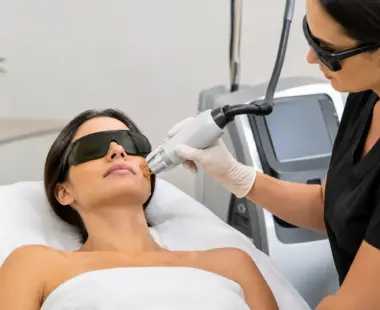
Learn how GentleMax Pro targets unwanted hair, pigmentation, and skin concerns with personalized settings, comfort, precision, and care. For visible results.
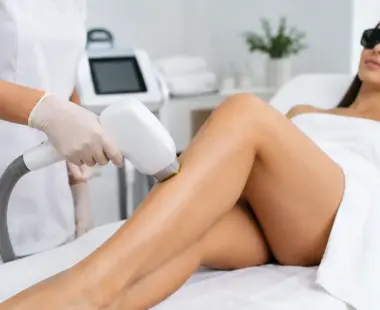
What causes laser hair regrowth after treatment? Learn how cycles, hormones, settings, and rare stimulation can affect your long-term results safely today.
Monday: 9 AM–7 PM
Tuesday: 9 AM–5 PM
Wednesday: 9 AM–7 PM
Thursday: 9 AM–5 PM
Friday: 9 AM–4 PM
Saturday: 9 AM–4 PM
Sunday: 9 AM–2 PM