

Best Hair Removal Phoenix Options for Smooth Skin
Searching for the best hair removal Phoenix offers? Learn how laser technology, skin-tone expertise, and a personal plan create smoother, lasting results for you.
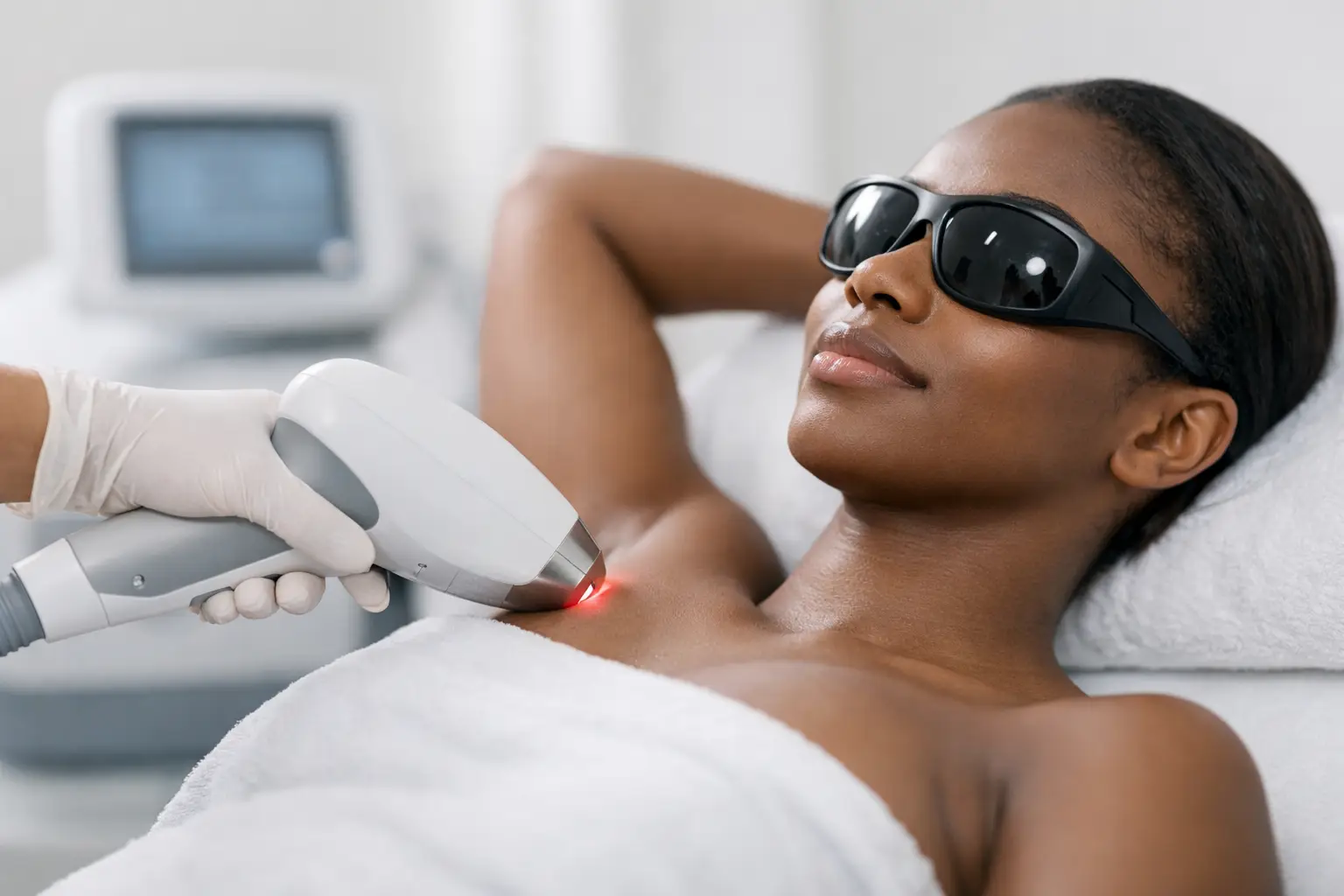
Smooth skin should not come with guesswork, especially if you have a deeper skin tone and have been told laser hair removal is risky. The reality is more encouraging than that. Laser hair removal for dark skin can be both safe and highly effective when the treatment is performed with the right technology, the right settings, and an experienced provider who understands how to treat melanin-rich skin responsibly.
For many patients, the biggest concern is not whether laser hair removal works. It is whether it can work without causing burns, discoloration, or irritation. That concern is valid. Darker skin contains more melanin, and melanin is exactly what laser energy targets. If the device is outdated or the settings are poorly chosen, the skin can absorb too much heat. If the treatment plan is customized correctly, however, the laser can focus on the hair follicle while protecting the surrounding skin.
Laser hair removal works by delivering light energy into the pigment in the hair. That energy converts to heat, which damages the follicle and slows future growth. The challenge with deeper skin tones is that there is also more pigment in the skin itself, so the provider has a smaller margin for error.
That does not mean darker skin should be excluded from treatment. It means the treatment needs to be more precise. Wavelength matters. Cooling matters. Pulse duration matters. So does the skill of the person choosing those settings.
This is where premium platforms make a meaningful difference. Devices such as the GentleMax Pro are widely trusted because they allow providers to tailor treatment based on skin tone, hair thickness, and the area being treated. For patients with dark skin, that level of control is not a luxury. It is a safety requirement.
Not every laser is a good match for every complexion. In general, the Nd:YAG laser is considered the gold standard for darker skin tones because its wavelength penetrates more deeply and is less likely to be absorbed by epidermal melanin. That lowers the risk of surface damage while still targeting the follicle.
Alexandrite lasers can be extremely effective, but they are typically better suited to lighter skin tones. IPL is often confused with laser hair removal, but it is not the same thing. It uses broad-spectrum light rather than a single laser wavelength, and for dark skin, that broader energy can increase risk if not selected very carefully. In many cases, patients with richer skin tones benefit most from a true laser platform with a proven Nd:YAG option and integrated cooling.
That is why a consultation should focus on more than price or package size. The device being used, the experience of the provider, and the treatment protocol matter just as much as the number of sessions.
A safe plan starts before the first pulse of laser energy. Your provider should review your skin type, hair color, hair density, medical history, sun exposure, and any tendency toward hyperpigmentation. If that conversation feels rushed, that is a red flag.
In many cases, a test spot is the most responsible next step. It gives the provider a chance to see how your skin responds before treating a larger area. This is especially useful if you are prone to post-inflammatory hyperpigmentation or if you have recently had sun exposure.
During treatment, cooling technology helps protect the skin and improve comfort. Settings should be adjusted over time as the hair becomes finer or the skin changes with the season. Good laser hair removal is not one-size-fits-all. For darker skin tones, customized treatment is what separates strong results from preventable complications.
When performed well, laser hair removal for dark skin can produce a major reduction in unwanted hair, fewer ingrown hairs, smoother texture, and less daily maintenance. Patients often notice slower regrowth after the first few sessions, with hair becoming softer and more sparse over time.
It is still important to set realistic expectations. Laser hair removal is a process, not a single appointment solution. Most areas require a series of treatments because hair grows in cycles, and the laser is most effective during the active growth phase. Hormonal areas such as the face can be more unpredictable than underarms or legs, and some patients benefit from maintenance sessions after their initial series.
Hair color also matters. The best results typically occur when there is strong contrast between the skin and the hair follicle itself, even in darker skin. Dark coarse hair tends to respond very well. Very light, gray, red, or white hair is often harder to treat because there is less pigment for the laser to target.
The fear of burning is usually the first concern, and for good reason. Older laser systems and inexperienced providers have contributed to that reputation. But modern FDA-approved technology paired with thoughtful treatment planning can reduce that risk significantly.
Another concern is hyperpigmentation or hypopigmentation. In simple terms, patients worry that the skin may darken or lighten after treatment. This can happen if the skin is treated too aggressively, if aftercare is ignored, or if a patient receives treatment while recently tanned. It is one more reason why provider judgment matters so much.
Pain is also a common question. Most patients describe the sensation as a quick snap with heat, not unbearable pain. Advanced cooling systems improve comfort substantially, and many people find laser hair removal far more tolerable than waxing, especially in sensitive areas.
Then there is the question of whether the treatment is worth the investment. If you are shaving often, managing razor bumps, or dealing with recurrent ingrown hairs, laser hair removal can deliver both cosmetic and practical value. The payoff tends to build over time.
Preparation is simple, but it matters. Skin should be as close to its natural tone as possible at the time of treatment, which means avoiding sun exposure and self-tanner before appointments. The area is usually shaved in advance so the laser can direct energy to the follicle instead of singeing surface hair.
After treatment, the skin may feel warm and look slightly pink for a short period. Gentle skincare, sun protection, and avoiding excess heat are usually advised. Patients with deeper skin tones should be especially consistent with SPF after treatment because inflammation plus sun exposure can increase the chance of pigmentation changes.
The details may vary by area and device, but the principle is the same. Protect the skin before treatment, calm the skin after treatment, and follow the timing recommended by your provider.
A sophisticated device is only part of the equation. The quality of the outcome often comes down to who is operating it. Treating darker skin safely requires a clear understanding of laser physics, skin response, and parameter selection. It also requires restraint. A provider should know when to adjust settings gradually rather than chasing aggressive results too quickly.
This is where a medically informed aesthetic practice stands apart. Patients should feel that the consultation is personalized, the device choice is intentional, and the treatment plan is designed around both safety and visible improvement. In a market where laser hair removal is offered in many settings, expertise is not interchangeable.
For patients in Scottsdale, Phoenix, Cave Creek, and Fountain Hills, that distinction can make the experience far more comfortable from the start. A practice that regularly works with a range of skin tones and uses advanced technology such as the GentleMax Pro is better positioned to deliver the kind of precision this treatment demands.
Sometimes the right answer is not no, but not yet. If your skin is recently tanned, irritated, or healing from another treatment, it may be smarter to wait. If you are taking certain medications or have an active skin condition in the area, timing and protocol may need to be adjusted.
There are also cases where hair texture, hormonal influences, or previous treatment history affect how quickly you see results. A trustworthy provider will explain those variables clearly rather than overpromising. The best treatment plans are built for your skin as it is, not for an idealized version of it.
The most reassuring thing about laser hair removal for dark skin is that the conversation has changed. With better technology, better training, and a stronger emphasis on individualized care, patients with deeper skin tones no longer have to choose between safety and results. You deserve both, and the right treatment plan should reflect that from the very first appointment.

Searching for the best hair removal Phoenix offers? Learn how laser technology, skin-tone expertise, and a personal plan create smoother, lasting results for you.
Compare laser hair removal versus electrolysis, including results, comfort, cost, skin tone, and treatment time, to choose the right approach for you.

Learn how to choose body contouring based on your goals, treatment area, timeline, and skin quality, with safe, personalized guidance for results today.
Monday: 9 AM–7 PM
Tuesday: 9 AM–5 PM
Wednesday: 9 AM–7 PM
Thursday: 9 AM–5 PM
Friday: 9 AM–4 PM
Saturday: 9 AM–4 PM
Sunday: 9 AM–2 PM